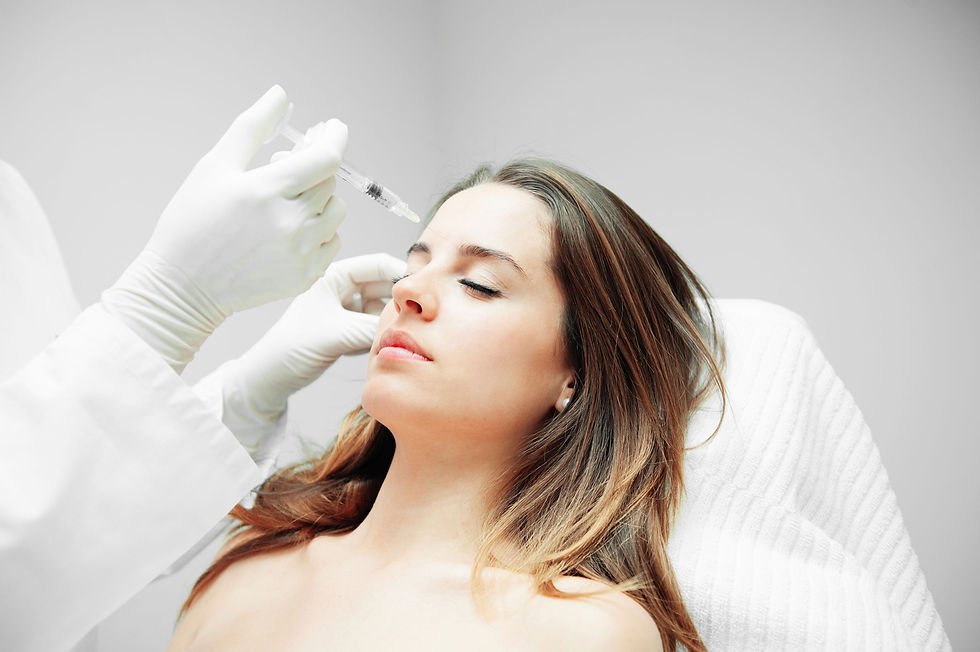
What is most important when picking a medical spa Botox injector?

Updated: Jul 29
Choosing the Right Botox Injector: A Quick Checklist
Before scheduling your Botox® appointment, ask the provider these five questions:
Are they a professional injector and a licensed medical professional such as a PA-C, NP, RN, MD, or DO?
Are they educated on facial anatomy and muscle function?
Do they have Before and After pictures to see their work?
Can you do a consult before your first injection?
Do they provide a clear follow-up process after my injections?
If the answer to each of these questions is yes, you'll likely feel more confident knowing you've chosen a provider who prioritizes both patient safety and natural-looking results.
Botox® is one of the most commonly performed aesthetic procedures in the world—but one of the most misunderstood.
Many people assume that because Botox is a quick office procedure, every injector produces similar results. In reality, nothing could be further from the truth.
A beautiful, natural-looking Botox treatment isn't simply about placing a few injections where wrinkles appear. It's about understanding how dozens of facial muscles work together to create expression, balance, symmetry, and movement. The best injectors know not only where to inject, but just as importantly, where not to inject.
That's why choosing your Botox injector may be one of the most important decisions you'll make on your aesthetic journey.
At Muse Medical Artistry, we believe Botox treatment is part science and part artistry. Every face is different, every muscle functions differently, and every treatment plan should be individualized. Our goal is never to create a "frozen" appearance—it is to help you look refreshed, rested, and naturally youthful while preserving the facial expressions that make you uniquely you.
Whether you're considering Botox for the first time or looking for a new provider, asking the five questions before you schedule an appointment can help you choose an injector with confidence.
Botox Is More Than Treating Wrinkles
It's about using the right amount, in the right location, for the right patient.
The wrinkles you see in the mirror are only part of your story. When you smile, squint, laugh, raise your eyebrows, or concentrate, dozens of muscles contract together. Some muscles pull upward. Others pull downward. Some create wrinkles while others maintain facial balance.
A skilled injector evaluates how your muscles function, not just where your wrinkles are.
This is why two clients with similar forehead lines often receive completely different treatment plans. Their facial anatomy, muscle strength, previous treatments, and cosmetic goals may all be different.
Many first-time patients are surprised to learn that the best Botox treatment often involves leaving certain muscles completely untreated. Relaxing the wrong muscle can affect eyebrow position, eyelid function, smile dynamics, or overall facial harmony.
Excellent Botox isn't about using more product.
Watch the Transformation—Then Look Beyond It
This image shows the before and after transition of a real Botox treatment result.
As the image changes, you'll notice softened lines and a smoother appearance. But what you should also notice is what didn't change.
The patient's face still looks like them.
Their expressions remain natural.
Their appearance looks refreshed rather than overdone.
That is one hallmark of thoughtful Botox treatment.
The second image tells an even more important story.

Instead of simply showing the final result, it illustrates where Botox was injected—and where it intentionally was not. The accompanying caption says it best:
"It's more than just treating crow's feet. It's about understanding anatomy, function, and consequences of treatment."
1. Choose an Injector With Medical Credentials
"Does it really matter who performs Botox?"
The answer is yes.
Botox is a prescription medication that affects communication between nerves and muscles. While the injections themselves are relatively quick, deciding where, how much, and whether to inject at all requires clinical judgment.
Qualified injectors typically have medical training such as:
Physician Associate (PA-C)
Nurse Practitioner (NP)
Registered Nurse (RN)
Medical Doctor (MD)
Doctor of Osteopathic Medicine (DO)
These professionals receive education in patient assessment, medical conditions, medication safety, anatomy, and complications that extend far beyond simply learning how to administer injections.
Medical credentials also mean your injector is better equipped to recognize when Botox may not be appropriate or when another treatment may provide a better outcome.
Why This Matters
Choosing an injector isn't simply about finding someone who knows how to hold a syringe. It's about finding someone who understands the human body.
At Muse Medical Artistry, Anne Mailhot, PA-C, brings a unique combination of advanced medical education and artistic expertise to every treatment.
As a Physician Associate, Certified (PA-C) and a professional artist, Anne blends an artistic eye with advanced medical training to create natural-looking results that respect each patient's unique facial structure rather than following a one-size-fits-all approach.
That combination of science and artistry influences every consultation and every treatment plan.
2. Ask About Their Education and Knowledge of Facial Anatomy
This may be the single most overlooked question patients can ask. Botox works by temporarily relaxing specific muscles. But the face isn't made up of isolated muscles. They're interconnected. Treating one area changes how surrounding muscles behave.
For example:
The muscles that create forehead lines also influence eyebrow position.
The muscles around the eyes contribute to smiling and facial expression.
Muscles around the mouth affect speech, smiling, and lip movement.
The muscles of the neck can influence jawline appearance.
A knowledgeable injector understands these relationships before making a single injection. Rather than treating wrinkles alone, they evaluate:
Facial symmetry
Muscle strength
Eyebrow position
Eyelid anatomy
Smile dynamics
Existing facial balance
Previous cosmetic treatments
Long-term aesthetic goals
This comprehensive assessment helps reduce the likelihood of unwanted outcomes while creating more natural-looking results. An experienced injector develops a treatment plan specifically for your face, not someone else's.
3. Review Before-and-After Photos Carefully
Before-and-after galleries tell you far more than whether someone can reduce wrinkles. They reveal an injector's philosophy. As you review photos and videos, don't focus only on whether wrinkles disappeared. Instead, ask yourself:
Does the person still look natural?
Are their eyebrows balanced?
Do they still have facial expression?
Does the treatment enhance their appearance without making them look "done"?
Would I be happy if these were my results?
The goal of excellent Botox isn't to make someone look different. It's to help them look like a refreshed version of themselves.
That's why reviewing authentic patient outcomes is one of the best ways to understand an injector's aesthetic style.
At Muse Medical Artistry, prospective patients are encouraged to review our Botox Before & After Gallery to see examples of real patient outcomes. Looking at multiple cases helps you understand how individualized treatment plans can produce consistently natural-looking results across different ages, facial structures, and treatment goals.
Remember that no two patients will have identical results because no two faces (and no two sets of facial muscles) are exactly alike.
4. Ask Whether They Perform a Consultation Before Your First Injection
A quality Botox appointment should begin with a conversation—not a syringe.
Every new patient at Muse Medical Artistry receives a consultation before treatment because understanding your goals is as important as understanding your anatomy.
Some patients want to soften forehead lines while maintaining expressive eyebrows. Others are primarily concerned with crow's feet, frown lines, or creating a more refreshed appearance without looking noticeably different. There is no universal treatment plan because there is no universal face.
A Botox Consultation Is About More Than Wrinkles
A thorough consultation gives your injector the opportunity to evaluate:
Your medical history
Previous Botox or cosmetic treatments
Current medications
Facial symmetry
Muscle movement during expression
Skin quality
Lifestyle and cosmetic goals
Areas that concern you most
Areas that may be better left untreated
This evaluation often reveals details that patients don't notice themselves. For example, one eyebrow may naturally sit slightly higher than the other, or one side of the forehead may have stronger muscle activity. These are really common issues because we're human. But recognizing them before treatment allows your injector to create a customized plan rather than applying the same number of units to both sides of the face.
Communication Creates Better Results
One of the biggest misconceptions about Botox is that everyone wants the same outcome.
Some patients prefer a very smooth forehead with minimal movement. Others specifically want to keep natural expression while reducing deeper lines. Your injector needs to understand your preferences before treatment begins.
A consultation is also the perfect time to discuss questions such as:
How long will my results last?
When will I start seeing results?
What areas would benefit most from treatment?
Will Botox help the concerns I'm noticing?
Are there treatments that would work better in combination with Botox?
Sometimes the answer isn't Botox alone.
Depending on your concerns, your provider may recommend combining Botox with dermal fillers, skin rejuvenation, or other aesthetic treatments to achieve the most balanced and natural result. The goal should never be to sell more treatments; it should be to recommend the treatment plan that best addresses your unique concerns.
Botox Is About Balance, Not Erasing Every Line
Experienced injectors know that eliminating every facial line isn't always the most natural-looking approach. Our faces communicate emotion. They help us smile, laugh, express concern, and connect with other people.
The best Botox treatments preserve your expressions while reducing the muscle activity that creates unwanted lines.
5. Ask About Their Follow-Up Protocol
Botox doesn't reach its final result immediately. Most patients begin noticing improvement within several days, with full results typically developing over the next one to two weeks. Because the treatment evolves gradually, evaluating the outcome immediately after your appointment doesn't provide the complete picture.
That's why it's important to ask:
"What happens after my treatment?"
A reputable injector will have a clear follow-up process.
Why Follow-Up Matters
Every person's muscles respond differently. Even with careful planning, minor refinements are occasionally appropriate after the medication has had time to take full effect. A provider who encourages follow-up demonstrates that they view Botox as a process rather than a one-time procedure.
At Muse Medical Artistry, patient care doesn't end when you leave the office. We want patients to feel comfortable asking questions, sharing how their treatment is progressing, and returning for evaluation if appropriate. That ongoing relationship helps us refine future treatment plans and continue delivering natural-looking results over time.
Follow-up appointments also allow your injector to:
Evaluate muscle response
Compare your results with your treatment goals
Discuss how long your results are lasting
Adjust future dosing if needed
Continue building a personalized treatment plan based on your unique facial anatomy
Over time, these observations become incredibly valuable because they help tailor future treatments specifically to you.
Ready to Book a Botox Consultation?
If you're ready to discuss your goals, Call Us or schedule a Botox consultation. We'd be honored to help you create a treatment plan that helps you look refreshed, confident, and authentically you.
We invite you to explore more educational resources from Muse Medical Artistry, including our Neurotoxin (Botox) treatment page, our Before & After gallery, and our Botox Provider biographies to learn more about our philosophy of combining medical expertise with artistic precision.